Volkswagen Coolant Leaks: The Signs That Show Up Before the Puddle
A coolant leak in a Volkswagen rarely announces itself. There is no puddle at first, no gauge climbing, no light on the dash. There is a faint sweet smell after you park, or an expansion tank sitting a little low that you top off and forget about.
That quiet stage is the inexpensive stage. Once a small seep becomes a real loss of coolant, you are no longer dealing with one housing and a set of seals. You are dealing with an engine that has run hot, and that repair looks nothing like the first one.
Late summer is when these things tend to surface. Months of heat, humidity, and stop-and-go traffic on the hills around Cincinnati's East Side put steady thermal load on a cooling system, and tired components pick right about now to give themselves away.
Why Volkswagen Cooling Systems Wear the Way They Do
Modern VW engines run a cooling system built largely around composite plastic housings rather than the cast metal used decades ago. Plastic is lighter, it can be molded into complicated shapes that would be expensive in aluminum, and it does not corrode. Those are real advantages, and they are why most manufacturers moved this direction.
The tradeoff shows up over years. Every drive takes those housings from ambient temperature up to operating temperature and back down again. Plastic expands and contracts at a different rate than the metal it bolts to, and the rubber O-rings sealing those joints get harder and less elastic as they age. Enough heat cycles and a sealing surface that was perfectly fine when the car was new starts to weep.
That is why a Volkswagen coolant leak usually shows up at a joint rather than in the middle of a hose. Thermostat housings, water pump assemblies, coupling flanges, and the expansion tank itself all get attention on higher-mileage cars. Which one is leaking on your specific car is a question for a lift and a pressure test, not for an article.
Early Signs of a Volkswagen Coolant Leak
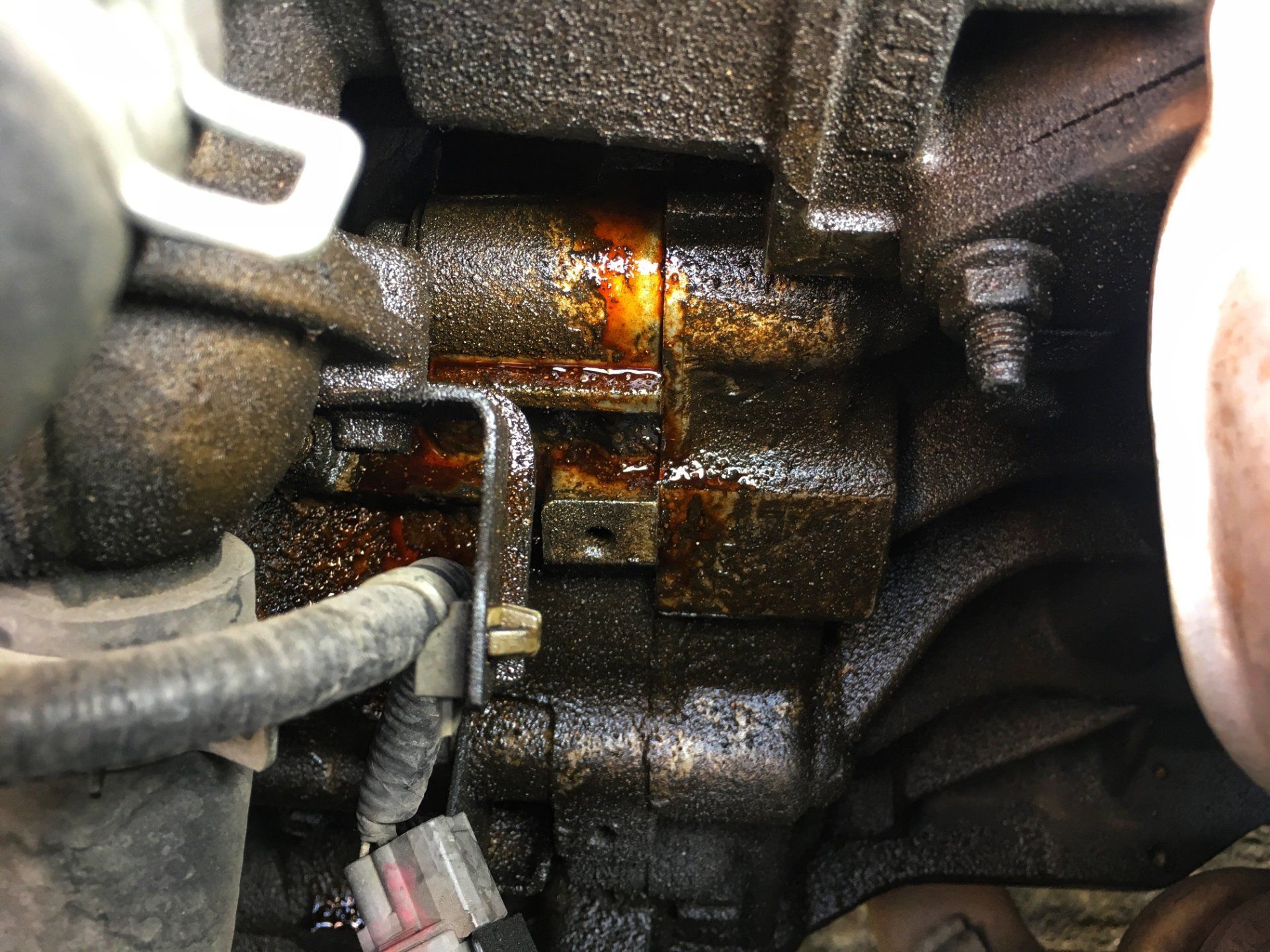
Coolant under pressure at operating temperature often escapes as vapor. It hits a hot surface, flashes off, and leaves dried residue behind instead of a drip. That means the driveway-stain test misses a large share of leaks entirely.
What is actually worth paying attention to:
- A sweet, slightly syrupy smell in the engine bay or through the vents shortly after you shut the car off
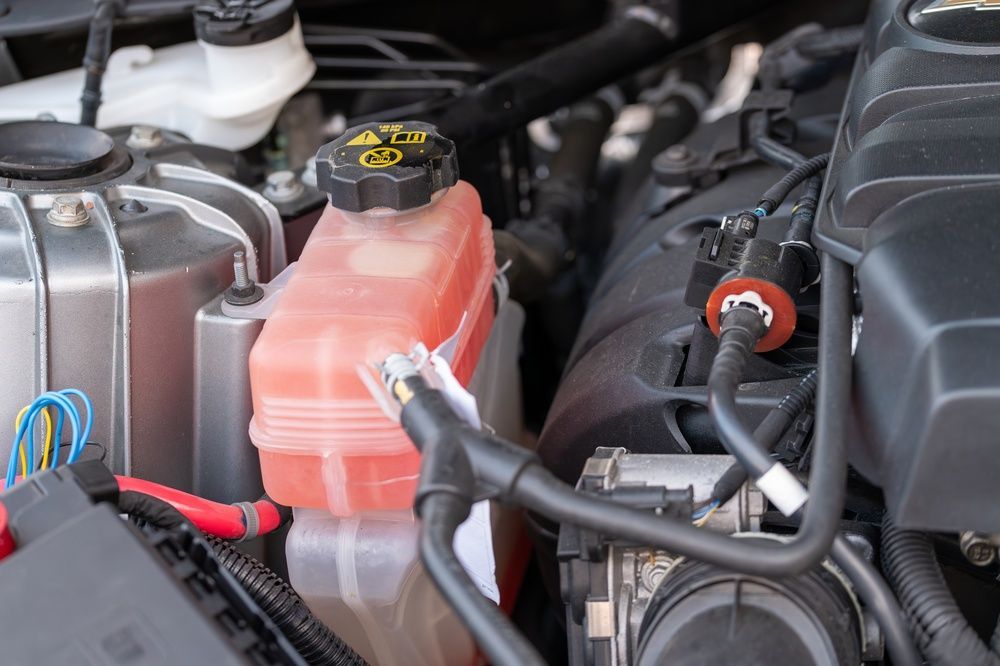
- An expansion tank that needs topping off more than occasionally
- Dried white, pink, or chalky residue around hose connections and housing seams
- Cabin heat that goes lukewarm at idle and comes back once you are moving
- A temperature gauge sitting higher than its usual position, or wandering
- Any coolant level or temperature message on the dash
None of that tells you which component has failed. A cooling system is a closed loop, and coolant travels along seams and shields before it finally exits, so the wet spot is frequently not the source. Isolating it is exactly what a pressure test is for.
When a Cooling Problem Means Stop Driving
Overheating is not something to manage on the way home. Aluminum cylinder heads distort when they get hot enough, and a few miles driven on a failed cooling system can turn a contained repair into a major one.
If the temperature gauge climbs into the red or you see steam, pull over as soon as it is safe to do so, shut the engine off, and leave it off. Do not open the expansion tank cap on a hot engine. The system is pressurized and the coolant inside is above its normal boiling point. Arrange a tow rather than trying to cover a few more miles. Dubwerx does not offer towing, so call a tow service and have the car brought to us.
A coolant warning that appears while you are driving gets the same treatment. Stop, shut it down, and call 513-795-8948. Nothing about that message is worth gambling an engine on.
What You Can Check, and What to Leave Alone
With the engine cold, you can look at the expansion tank and compare the level to the minimum and maximum marks. You can look for dried residue around hoses and seams with a flashlight. You can note when the smell appears and how often you are adding coolant, which is genuinely useful information for a technician.
What to avoid is topping off with whatever is on the parts store shelf. VW specifies a particular coolant chemistry, and mixing incompatible types can reduce corrosion protection or cause the coolant to gel. Your owner's manual lists the correct specification for your car.
Worth saying plainly: coolant is not consumed in normal operation the way fuel or brake pad material is. If the level keeps dropping, it is going somewhere.
How Dubwerx Approaches Cooling System Work
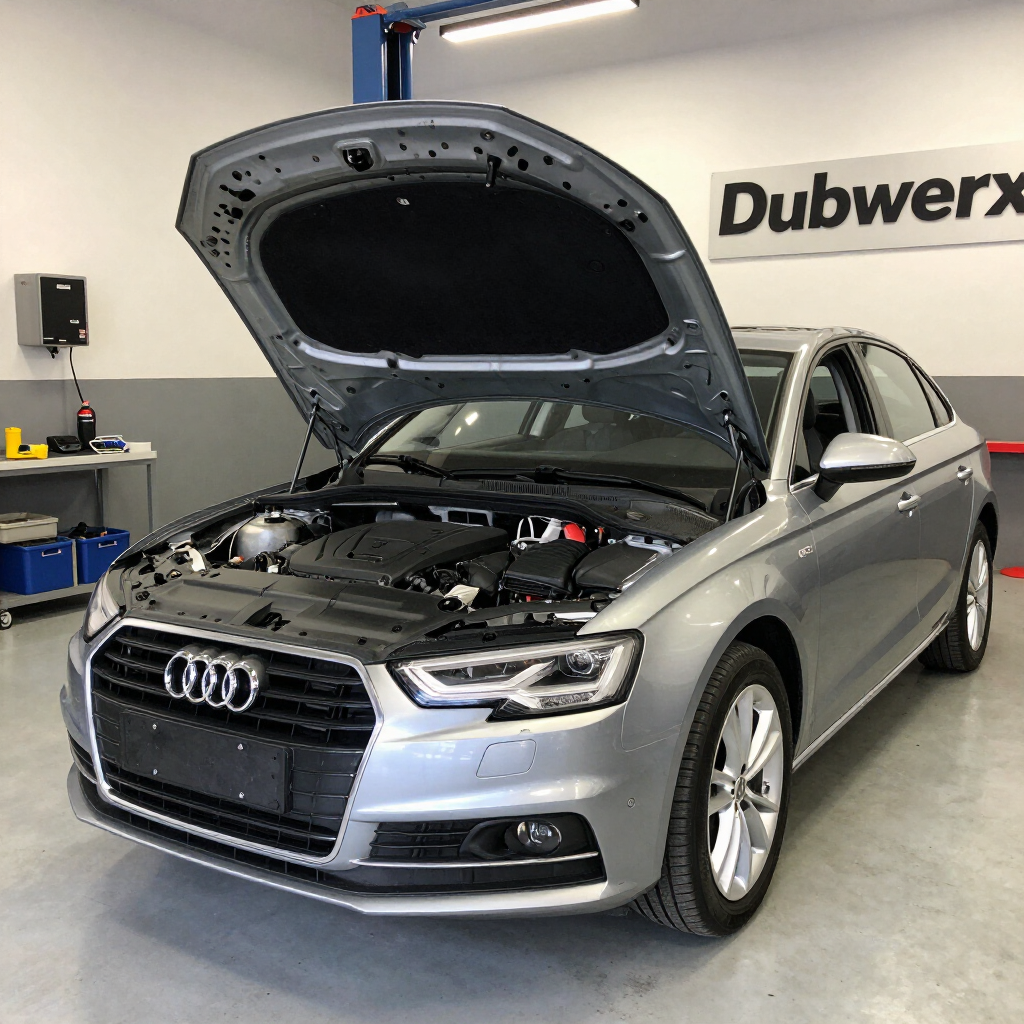
Dubwerx works exclusively on Volkswagen, Audi, and Porsche. That narrow focus is the point. When a shop sees the same cooling system architecture week after week, the technician already knows where these leaks hide and which sealing surfaces deserve a second look while the car is apart.
Every appointment includes full diagnostic work, so a leak gets traced to its actual source before anything is quoted or replaced. The parts we install are OEM-grade or better, and our relationships with German parts manufacturers mean that savings get passed along to you. Every repair carries a 3-year/36,000-mile warranty on parts and labor, where most shops stop at 12 months and 12,000 miles.
If the car needs to stay with us, our transportation options include a free Uber shuttle, discounted rentals, and loaner cars, all subject to availability. Calling about a week ahead of your appointment gives us the best chance of lining something up.
Schedule Volkswagen Service at Dubwerx
If your VW smells sweet after a drive, or the expansion tank keeps ending up low, get it looked at while it is still a seep. Call 513-795-8948 to schedule Volkswagen repair with a shop that works on these cars every day. We are at 6323 Madison Road in Cincinnati, and every repair is backed by our 3-year/36,000-mile warranty on parts and labor.